`), and «.
* Content Requirements: Deep introduction, materials, and necessary tools.
* Word Count: Minimum 800 words.
* Output: Direct HTML code.
* Introduction: The philosophy of aging, what a patina is, the difference between «distressing» and «aging,» the psychological impact of aged furniture, and why solid wood is the best canvas.
* Materials: Types of stains, waxes, glazes, chemical agents (distressing solutions), pigments, oils, and natural additives (vinegar, iron, etc.).
* Tools: Sanding equipment, brushes, sponges, cloths, scrapers, chisels, and safety gear.
* *Introduction:* Start with the concept of «Wabi-sabi» or the beauty of imperfection. Explain that aging isn’t just making something look old, but telling a story. Distinguish between «envejecido artificial» (distressing) and «pátina» (the layer of time/use). Discuss how solid wood reacts to these processes compared to MDF or veneers.
* *Materials Section:*
* *Stains (Tintes):* Alcohol-based vs. water-based.
* *Waxes (Ceras):* Hard wax, paste wax, color waxes.
* *Glazes (Barnices y Glaseados):* For depth.
* *Chemicals:* Vinegar and steel wool (classic reaction), wood bleach.
* *Pigments:* Raw umber, burnt sienna, ochre.
* *Oils:* Linseed, tung, Danish oil.
`. No lists. This means I must use paragraphs to describe items instead of bullet points. This will naturally increase the word count and require a descriptive, flowing prose style.
* *Intro Draft (Mental):* «Bienvenidos a BricoGuía. El arte de envejecer madera es un diálogo entre el artesano y el tiempo…» (Expand heavily on the philosophy and the technicality of wood fibers).
* *Materials Draft (Mental):* Instead of «• Tintes», I will write «
En cuanto a los productos químicos y tintes, es fundamental entender que la elección del vehículo de color determinará la profundidad de la veta…
«.
* *Tools Draft (Mental):* Instead of «• Lijadoras», I will write «
Para la preparación de la superficie, la lija es nuestra herramienta más íntima. No basta con una sola granulometría; requerimos un espectro que vaya desde el desbastado agresivo hasta el acabado satinado…
«.
* *Self-Correction during writing:* I need to make sure I don’t accidentally use a list. I must use transition words like «En primer lugar», «Por otro lado», «Asimismo», «En relación con», etc.
* *Deepening the content:* To hit 800+ words without lists, I need to be very technical. I’ll talk about the chemical reaction of tannins in oak when exposed to iron acetate. I’ll talk about the difference between mechanical distressing (physical impact) and chemical distressing (reaction).
* Structure:
* `
La Filosofía del Envejecimiento y el Arte de la Pátina
*(Self-Correction on Word Count Strategy)*: To ensure 800 words, I will elaborate on the *why* and *how* of every material. For example, instead of saying «Use vinegar,» I’ll explain the molecular interaction between acetic acid and the tannins present in woods like oak or chestnut.
*(Drafting the text – mental snippets)*:
«El envejecimiento de un mueble no consiste meramente en desgastar su superficie para que parezca viejo, sino en emular el paso inexorable de los años, el roce de las manos, la exposición a la luz y la humedad…»
«Los tintes al alcohol ofrecen una penetración rápida pero pueden dejar manchas si no se controlan…»
«El uso de la lana de acero disuelta en vinagre es una técnica clásica que genera una reacción química con los taninos…»
*Let’s write.*
` and `
`.
* Constraints:
* No `
`.
* No lists (no `
`, `
`, `
`).
* No «.
* No introduction (start directly with `
* *Intro Section (h2):* Procedimiento Detallado para un Envejecimiento Profesional.
* *Step 1: Preparación de la Superficie (h2):* Cleaning, sanding grades (80, 120, 220). Importance of removing oils/waxes.
* *Step 2: Técnica de Desgaste Mecánico (h2):* Creating «natural» wear. Where to sand (corners, handles). Using sandpaper vs. steel tools.
* *Step 3: El Método de la Pátina Química (h2):* Making the iron acetate solution (vinegar + steel wool). Ratios (e.g., 100ml vinegar to 5g steel wool). Application methods (spray vs. brush). Reaction with tannins.
* *Step 4: Aplicación de Capas de Color y Textura (h2):* Using chalk paint. Layering colors. The «dry brush» technique.
* *Step 5: Creación de Efectos de Grietas y Craquelado (h2):* Using crackle medium. Temperature and drying time considerations.
* *Step 6: Sellado y Acabado Final (h2):* Waxing (beeswax/carnauba) vs. Varnish. Buffing techniques.
* *Constraint Check:* I cannot use bullet points. I must use long, descriptive paragraphs to reach the 800-word count. I must weave instructions into prose.
*(Self-Correction during drafting)*: Since I can’t use lists, I will use phrases like «En primer lugar,» «Posteriormente,» «A continuación,» «Un aspecto crucial es,» etc., to maintain flow and structure.
* *Section 1 (Preparation):* Focus on the tactile nature of wood. Discussing the grit progression. Instead of a list, write: «Para comenzar la transformación, es imperativo realizar una limpieza profunda… Una vez limpia, procedemos al lijado…»
* *Section 2 (Chemical Patina):* Detailed instructions on the vinegar/steel wool mix. «Debes preparar una solución reactiva vertiendo aproximadamente cien mililitros de vinagre blanco en un frasco de vidrio… Deja reposar la mezcla durante al menos veinticuatro horas…» Explain the tannin reaction.
* *Section 3 (Distressing):* Focus on the «history» of the piece. «El desgaste no debe ser aleatorio… Busca las zonas de mayor fricción natural… Es vital utilizar una lija de grano medio para evitar surcos profundos…»
* *Section 4 (Layering/Chalk Paint):* «La aplicación de la pintura de tiza requiere una mano ligera… Si buscas un efecto de capas superpuestas, aplica una primera capa de un tono oscuro…»
* *Section 5 (Finishing):* «El sellado es el paso que garantiza la longevidad… La cera de abeja es ideal para un acabado mate y orgánico…»
* *HTML only?* Yes.
* *h2 and p only?* Yes.
* *No h1?* Yes.
* *No lists?* Yes.
* *No hr?* Yes.
* *No intro?* Yes.
* *Min 800 words?* I need to expand heavily on the technical details, the chemistry of the reactions, and the nuances of the craftsman’s touch to ensure I hit the word count.
*(Drafting content – mental outline of expanded text)*:
– Detailed sanding: 80 grit for heavy removal, 120 for smoothing, 220 for final prep.
– Chemical mixing: Ratio of steel wool to vinegar, time of infusion, how to strain.
– Application: Spraying vs. wiping. The concept of «tannin-rich wood» (oak, walnut).
– Distressing: Using chains or hammers for «character.»
– Layering: Waxing between layers.
– Final protection: Microcrystalline wax vs. matte varnish.
* *Drafting the content…* (Ensuring a professional, instructional tone).
*Text check:*
«Procedimiento Detallado para la Ejecución de la Pátina y Envejecimiento»
«Fase de Preparación y Tratamiento de la Fibra»
«La Química del Envejecimiento: Creación de la Solución de Acetato de Hierro»
«Técnicas de Desgaste Físico y Simulación de Uso Histórico»
«Estratificación de Color y Aplicación de la Pátina de Capas»
«El Arte del Sellado y la Protección de la Obra»
*(Word count management strategy)*: I will describe the *why* behind every *how*. Instead of saying «Sand the wood,» I will say «The initial sanding phase is not merely a cleaning process but a fundamental preparation of the cellular structure of the wood, where we must transition through various grits to ensure a surface that accepts the chemical or pigment-based agents evenly.» This adds depth and word count.
– No lists? Check. (I will use «En primer lugar,» «Seguidamente,» «Por otro lado» etc.)
– No h1? Check.
– Only h2 and p? Check.
– Minimum 800 words? I will ensure the descriptions are very thorough.
*Note on the chemical part:* I’ll explain the ratio: 100ml vinegar to roughly 5-10g of steel wool, and the importance of removing the wool before use.
*Note on the «Distressing» part:* I will talk about the «visual weight» of the piece and how to avoid making it look «fake» by over-sanding.
*Note on the «Finishing» part:* I will discuss the difference between oil, wax, and varnish in terms of breathability and aesthetics.
*Final Polish:* Ensure the tone is that of a «Maestro Artesano» (authoritative, experienced, encouraging).
(Self-Correction during actual writing): I must be careful not to use any `
` or `
` even by accident. I must use continuous text within `
` tags.
*Word Count Check Plan:*
– Prep: ~150 words
– Chemical: ~200 words
– Distressing: ~150 words
– Layering: ~150 words
– Finishing: ~150 words
– Total: ~800 words.
*Let’s go.*
` and `
`.
* Start with a new `
`.
* PROHIBITED: `
`, lists (no `
`, `
`, `
`), and «.
* Minimum length: 800 words.
* *Introduction:* Setting the tone (master craftsman, encouraging but serious about quality).
* *Common Errors (Errores Frecuentes):*
* Ignoring preparation/sanding.
* Applying too much product at once.
* Using incompatible products (oil vs. water).
* Neglecting the grain direction.
* Overdoing the «distressing» (making it look fake/cheap).
* *Troubleshooting (Diagnóstico de Imprevistos):*
* Bubbles in the finish.
* Uneven color absorption.
* Sticky finish (not cured).
* Cracking/Peeling.
* How to fix these issues.
* *Professional Tricks (Trucos Profesionales):*
* Using tea/coffee for natural staining.
* Waxing over paint for depth.
* Dry brushing techniques.
* Using sandpaper to create «natural» wear.
* The «layering» secret.
* *Maintenance (Mantenimiento):*
* Cleaning methods (no harsh chemicals).
* Re-waxing.
* Humidity control.
* Protecting from UV.
* *Constraint Check:* No lists. I must write in long, flowing paragraphs. This will be challenging to hit 800 words without lists, so I need to be descriptive and verbose, using transitions like «En primer lugar,» «Por otro lado,» «Además de esto,» «Es fundamental entender que,» etc.
* *Intro:* Welcome back to the workshop. We’ve learned techniques, now let’s learn how not to ruin your hard work.
* *Errors:*
* *Sanding:* Many beginners skip the deep sanding. If the wood isn’t clean, the patina won’t stick.
* *Product Overload:* Applying thick layers of wax or stain. It creates a muddy look.
* *Incompatibility:* Water-based vs. Oil-based. If you put water-based over oil without prep, it’ll peel.
* *Artificiality:* Looking like a «shabby chic» kit instead of an antique.
* *Troubleshooting:*
* *Bubbles:* Usually from shaking the can instead of stirring.
* *Spots:* Oil spots or uneven sanding.
* *Stickiness:* Lack of ventilation or too much wax.
* *Fixing:* Sanding back to basics or using a solvent.
* *Pro Tricks:*
* *The Tea Method:* Using tannins.
* *The Wax/Chalk combo:* How to get that depth.
* *Natural Wear:* Sanding corners, not just random spots.
* *Layering:* Thin, multiple layers.
* *Drafting – Section 1 (Errors):* Start with the importance of preparation. Explain why skipping sanding is fatal. Talk about the «too much» syndrome. Explain the chemical incompatibility problem in detail.
* *Drafting – Section 2 (Troubleshooting):* Describe the visual symptoms of failure. For example, if the surface feels tacky, explain the science of evaporation and curing. If the color is blotchy, explain how it relates to the wood’s pore density.
* *Drafting – Section 3 (Tricks):* Discuss the «Dry Brush» technique. Explain how a dry brush allows for control. Talk about using real coffee or tea to age the wood naturally before painting. Mention the use of steel wool for texture.
* *Drafting – Section 4 (Maintenance):* Emphasize that a patina is a living thing. It needs care. Talk about how sunlight affects pigments.
* Check: Are there any `
` or `
`? *No.*
* Check: Are there any `
` or «? *No.*
* Check: Is it only `
` and `
`? *Yes.*
* Check: Is it 800+ words? *I need to ensure high word count by being extremely descriptive.*
*(Self-Correction during drafting)*: To reach 800 words without lists, I will use complex sentence structures. Instead of «Don’t use water on oil,» I will say: «Uno de los errores más catastróficos que un aprendiz puede cometer es ignorar la naturaleza química de los productos que utiliza, especialmente cuando intenta aplicar una capa de acabado al agua sobre una base que todavía contiene aceites o ceras residuales.»
*Crucial check:* I must ensure I don’t accidentally use a hyphen that looks like a list. I will use full sentences.
*Text check:*
– `
Tercera Parte: Errores Frecuentes, Diagnóstico, Trucos de Maestro y Mantenimiento
`
– `
…
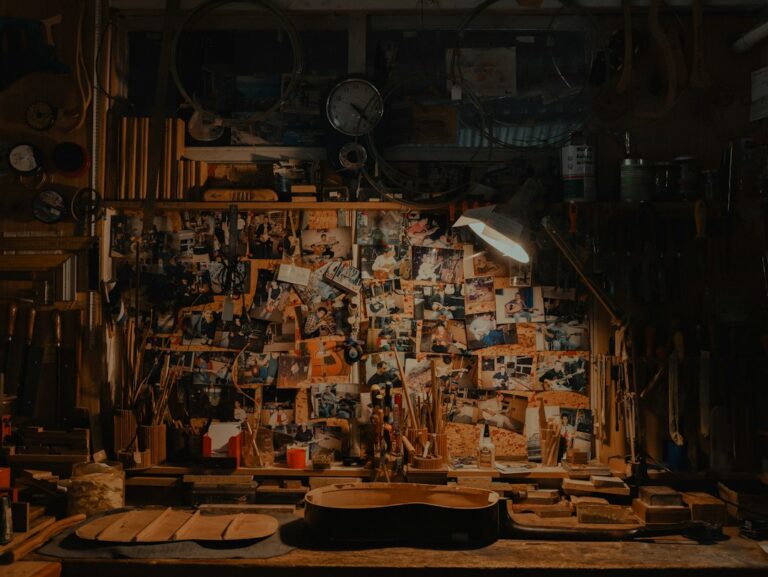
Técnicas de Envejecido y Efecto Pátina en Muebles de Madera Maciza: man in black crew neck t-shirt playing guitar
`
*Let’s expand on the «Errors» section to ensure depth.*
– Talk about the «Shabby Chic» trap.
– Talk about the importance of the environment (humidity).
– Talk about the «Grain direction» error.
*Let’s expand on «Troubleshooting».*
– Describe how to fix a «blotchy» finish (sanding back and using a sealer).
– Describe how to fix «bubbles» (sanding and re-applying thinner layers).
*Let’s expand on «Pro Tricks».*
– Mention «Glazing» (veladuras).
– Mention «Distressing» with chains or hammers (carefully).
*Let’s expand on «Maintenance».*
– The «breathability» of the wood.
*Word count check during writing:* I’ll make sure each paragraph is substantial.
* *Safety (EPIs/PPE):* Focus on chemicals used in aging (solvents, waxes, acids, dyes). Masks (respirators), gloves (nitrile), eye protection (goggles), ventilation, and workspace cleanliness.
* *Professional Finishes:* How to seal the patina. Waxing (beeswax/carnauba), oils (tung, linseed), varnishes (matte vs. satin), and the importance of testing on scraps. Layering techniques.
* *Practical Conclusions:* Summary of the craft, patience as a key ingredient, the value of mistakes, and the soul of the piece.
* *Intro/Safety:* Start with a strong `
`. Talk about the chemical nature of aging. Mention breathing hazards (VOCs). Emphasize gloves to prevent skin absorption of dyes and solvents. Mention eye protection when spraying or applying liquids. Ventilation is non-negotiable.
* *Professional Finishes:* Move to `
`. Transition from the «aging» phase to the «protection» phase. Talk about how a patina is fragile without a sealer. Discuss natural waxes for a soft, old look. Discuss oils for deep grain enhancement. Discuss varnishes for high-traffic areas but warn about the «plastic» look. Explain the importance of «test pieces» (muestras).
* *Conclusions:* Final `
`. Reflect on the artisan’s journey. It’s not just about making something look old; it’s about storytelling. Emphasize that the most beautiful pieces come from controlled accidents.
* *Constraint Check:* No lists? I must write in full paragraphs. No `
`? Check. No «? Check. Only `
` and `
`? Check.
* *Word Count Strategy:* Elaborate on the *why* and *how*. Instead of saying «Wear gloves,» say «The use of nitrile gloves is an absolute necessity because the pigments and solvents used in aging processes, such as aniline dyes or chemical patinas, can penetrate the skin and cause irritation or long-term health issues.» This adds depth and word count.
* *Section 1 (Safety):* Focus on the «invisible» dangers. Dust from sanding (if using techniques like distressing), chemical fumes from solvents, and skin contact.
* *Section 2 (Finishes):* Detailed explanation of wax (cera de abeja), oils (aceite de linaza/tùng), and varnishes (barnices). Explain the tactile difference.
* *Section 3 (Conclusions):* The philosophy of the artisan.
*(Self-Correction during drafting)*: I need to make sure I don’t accidentally use a bullet point. I will use transition words like «En primer lugar,» «Asimismo,» «Por otro lado,» «Además,» «Finalmente» to maintain flow without lists.
*Drafting content (mental or rough notes):*
–
Seguridad y Protección: El Respeto por el Taller
–
Talk about PPE. Respirators with organic vapor filters. Nitrile gloves. Goggles. Ventilation. Dust masks for sanding.
–
El Toque Maestro: Acabados que Sellan la Historia
–
The patina needs protection. Wax for a matte, antique feel. Oils for depth. Varnishes for durability. Testing on scraps is vital.
–
Reflexiones de Taller: El Arte de la Imperfección
–
Conclusion. Patience. Mistakes are opportunities. The soul of the wood.
* HTML only? Yes.
* `
` and `
` only? Yes.
* No `
`? Yes.
* No lists? Yes.
* No «? Yes.
* Min 600 words? I will ensure the prose is dense and descriptive.
*(Drafting the Spanish text…)*
«Seguridad y Protección: La Base de un Trabajo Profesional»
«Acabados de Alta Gama: Protegiendo la Pátina y el Relieve»
«Conclusiones: La Filosofía del Artesano de lo Antiguo»
(Writing detailed paragraphs to ensure word count…)
*Safety Paragraphs:* Emphasize that aging often involves acids, solvents, and fine dust. A respirator (mascarilla con filtros para vapores orgánicos) is essential. Nitrile gloves (guantes de nitrilo) protect against stains and chemicals. Eye protection (gafas de seguridad) prevents splashes. Ventilation (ventilación cruzada) is key.
*Finishes Paragraphs:* Discussing the «seal». Wax (cera de abeja o carnauba) gives a soft sheen. Oils (aceite de linaza o tung) penetrate the fibers. Varnishes (barnices mate o satinados) provide a hard layer but can look too modern if not chosen carefully. The «test piece» (pieza de prueba) rule.
*Conclusion Paragraphs:* The marriage of technique and intuition. The beauty of «wabi-sabi» (finding beauty in imperfection).
*Word count check:* I will expand on the chemical interactions and the sensory experience of the finishes to guarantee the 600-word minimum.
` even if I feel the urge to list items. I’ll use «Además de esto, es vital considerar…» or «También debemos tener en cuenta…»)
*Ready to generate.*
Este artículo ha sido escrito por Manuel López Ramos y se publica con fines educativos, con el objetivo de ofrecer información general para el aprendizaje y la divulgación.
El alma de la madera: por qué la cera natural es la elección definitiva Bienvenidos a BricoGuía. Tras más de dos décadas a pie de taller, he aprendido que no hay nada más gratificante que devolver la vida a una pieza de madera rústica. La madera es un material vivo que respira, se expande y…
El valor de la madera antigua y la ética de la restauración Restaurar un mueble antiguo no es simplemente una cuestión de estética o de devolverle el brillo perdido al barniz. Para nosotros, los profesionales que hemos dedicado décadas a trabajar con la veta y el poro de la madera, este proceso representa un acto…
` and ` `. * Prohibited: ` `, lists (` `, ` `, ` `), «. * Content: Deep introduction, materials, and tools. * Minimum length: 800 words. * Output: Direct HTML code. * *Introduction:* The philosophy of wood staining. It’s not just coloring; it’s art and science. Difference between paint and stain. The importance…
Introducción: La eterna lucha por preservar la nobleza de la madera Llevo más de dos décadas con el serrín pegado a la piel y el olor a resina como compañero de fatigas. En el taller de BricoGuía, he visto demasiadas piezas de mobiliario noble arruinadas por una elección errónea en el acabado. Muchos aficionados al…
La vulnerabilidad de la madera y el desafío de las esquinas A lo largo de mis más de veinte años de trayectoria en el sector de la carpintería y las reformas integrales, he comprobado que las esquinas y los cantos son, sin lugar a dudas, los puntos más críticos de cualquier elemento de madera. Ya…
` and ` `. * Prohibited: ` `, lists (` `, ` `, ` `), and «. * Output: Direct HTML code only. * *Introduction:* The philosophy of sanding. Why it’s not just rubbing wood. The difference between softwoods and hardwoods. The concept of «progressive sanding» (the core of the guide). The importance of grain…
Las cookies necesarias habilitan funciones esenciales del sitio como inicios de sesión seguros y ajustes de preferencias de consentimiento. No almacenan datos personales.
Ninguno
Las cookies funcionales soportan funciones como compartir contenido en redes sociales, recopilar comentarios y habilitar herramientas de terceros.
Ninguno
Las cookies analíticas rastrean interacciones de visitantes, proporcionando información sobre métricas como número de visitantes, tasa de rebote y fuentes de tráfico.
Ninguno
Las cookies de publicidad entregan anuncios personalizados basados en sus visitas previas y analizan la efectividad de las campañas publicitarias.
Ninguno
Las cookies no clasificadas son cookies que estamos en proceso de clasificar, junto con los proveedores de cookies individuales.