`), and «.
* Length: Minimum 800 words.
* Output: Direct HTML code.
* *Introduction:* The importance of kitchen renovation without full replacement. The cost-benefit of painting. The specific choice of synthetic enamel (durability, resistance to grease/moisture). The mindset of a professional (patience, preparation).
* *Materials and Tools:* Detailed breakdown.
* Cleaning/Degreasing: Degreaser, sponges, cloths.
* Sanding: Sandpaper (different grits), sanding block.
* Repair: Wood filler (masilla), putty knife.
* Priming: Primer (imprimación) specifically for synthetic enamel or wood.
* Painting: Synthetic enamel (gloss/satin), brushes (sable/synthetic), rollers (foam/velvet).
* Protection: Masking tape, plastic sheets, newspaper.
* Safety: Gloves, mask, goggles.
* *Intro:* Start by addressing the user as a «maker» or «renovator». Explain that the kitchen is the heart of the home. Explain why painting is better than replacing (sustainability, budget). Talk about the technical challenges (grease, humidity). Define «Esmalte Sintético» and why it’s chosen for its hard finish.
* *Tools/Materials Section:* Since I cannot use lists, I must use paragraphs to describe each item. I’ll group them by «phase» or «category» using `
` headers.
* *Drafting – Section 1: Introduction (approx 400 words)*
Focus on the psychological and economic aspect. The kitchen is often the most expensive room to renovate. A professional approach distinguishes a «DIY amateur» from a «master». Emphasize that the secret isn’t in the paint, but in the preparation.
* *Drafting – Section 2: Essential Tools for Preparation (approx 250 words)*
Discuss sandpaper (grits 80, 120, 240). Discuss sanding blocks. Discuss the importance of degreasers (desengrasantes industriales). Discuss masking tape (cinta de carrocero) and how to use it.
* *Drafting – Section 3: Repair and Priming Materials (approx 200 words)*
Wood filler (masilla para madera). The importance of the primer (imprimación). Why a primer is non-negotiable for synthetic enamel on old surfaces.
* *Drafting – Section 4: The Painting Kit (approx 150 words)*
Synthetic enamel characteristics. High-quality brushes (pinceles de cerda fina). Microfiber or foam rollers (rodillos de espuma o microfibra) for a smooth finish.
* *Self-Correction during drafting:* I need to ensure I don’t use `
` or `
`. I must weave everything into descriptive paragraphs.
* *Check Word Count:* I need to be verbose and technical to hit the 800-word mark. I will expand on the *why* and *how* of each tool.
*(Self-Correction on Language)*: Use terms like «lijado», «imprimación», «esmalte sintético», «desengrasante», «masilla», «rodillo de espuma de alta densidad».
* *Intro:* «Bienvenidos a esta guía técnica de BricoGuía…» Talk about the kitchen’s environment. Grease (grasa) and heat (calor) are enemies. Synthetic enamel provides a hard, washable layer.
* *Tools (Sanding):* Detailed explanation of grits. 120 for initial, 240 for finishing.
* *Tools (Cleaning):* Not just soap, but alkaline degreasers.
* *Tools (Painting):* The difference between a brush and a roller. The importance of «sin marcas» (mark-free).
* `
` used? Yes.
* `
` used? Yes.
* `
` avoided? Yes.
* Lists avoided? Yes.
* « avoided? Yes.
* Language: Spanish (Spain).
* Topic: Part 1 (Intro + Materials).
* Word count: Aiming for >800.
*(Detailed Writing Strategy for Word Count)*:
Instead of saying «You need sandpaper», say: «El proceso de transformación de un mueble de cocina comienza mucho antes de abrir el bote de pintura; todo nace en la fase de preparación mecánica de la superficie. Para ello, la elección del abrasivo es crítica. No basta con tener un trozo de papel de lija; necesitaremos una variedad de granos que nos permitan transitar desde un lijado de desbaste hasta uno de acabado fino…» (This adds technical depth and length).
(Note: I will ensure the tone is that of a seasoned professional, teaching the «why» behind the «what».)
*Check on «Esmalte Sintético»:* It’s oil-based. It needs mineral spirits (aguarrás) for cleaning brushes and thinning. I must include this.
*Check on «Neutral Spanish (Spain)»:* Use «muebles», «armarios», «esmalte», «lijado», «rodillo», «aguarrás».
*Final Polish of the HTML structure.* (No `
`, only `
` and `
`).
*Wait, I must ensure I don’t accidentally use a list.* I will use transition words like «En primer lugar», «Por otro lado», «Asimismo», «Además», «En cuanto a».
*Drafting content details:*
– Intro: The kitchen as a high-traffic area. The cost of cabinetry vs. the economy of painting. The technical nature of synthetic enamel (drying time, hardness, smell).
– Materials: Degreasers (essential for kitchens). Sandpaper (grit explanation: 80 for heavy, 120/180 for smoothing, 240/320 for between coats). Wood filler (masilla). Primer (imprimación para superficies no porosas o madera). The paint (Synthetic enamel – gloss/satin). Brushes (pinceles de cerda natural/sintética). Rollers (rodillos de microfibra o espuma).
– Protection/Safety: Masking tape (cinta de carrocero), drop cloths (plásticos/periódicos), gloves (guantes de nitrilo), respirator (mascarilla con filtros para vapores orgánicos – crucial for synthetic enamel).
`.
* NO lists (ul/ol/li).
* NO «.
* NO introduction (start directly with a new `
`).
* Minimum 800 words.
* Language: Spanish.
* Phase 1: Disassembly and Preparation (Removing hinges, handles, cleaning).
* Phase 2: Sanding and Surface Leveling (Grit sizes, techniques).
* Phase 3: Repair and Filling (Wood filler, putty, smoothing).
* Phase 4: Priming (The importance of the primer for synthetic enamel).
* Phase 5: Painting Technique (The actual application of synthetic enamel, thinning, drying times, brush vs. roller).
* Phase 6: Final Finishing and Reassembly.
* *Introduction to Part 2:* Emphasize precision and patience.
* *Step 1: Desmontaje y Preparación de la Zona de Trabajo:* Detailed instructions on removing hardware. Mention measuring screws. Importance of labeling.
* *Step 2: El Arte del Lijado y la Preparación de la Superficie:* Explain grit sequence (80 -> 120 -> 220). The «feel» of the surface.
* *Step 3: Reparación de Imperfecciones y Masillado:* Using wood filler. How to apply without leaving too much residue. Drying times.
* *Step 4: Limpieza Profunda y Desengrasado:* The crucial step. Using alcohol or degreaser. No dust allowed.
* *Step 5: Aplicación de la Imprimación (Primer):* Why it’s needed for synthetic enamel. Avoiding «islands» or unevenness.
* *Step 6: La Ejecución Técnica del Esmalte Sintético:* Thinning (dilución). The «cross» technique. Avoiding drips (chorretones). Drying between coats.
* *Step 7: El Toque Final y Reensamblaje:* Final light sanding. Reinstalling hardware.
* *Self-Correction during drafting:* I need to ensure I don’t use lists. I must use long, descriptive paragraphs to meet the word count and follow the «no lists» rule. I will use `
` for sections and `
` for content.
*(Self-Correction on Word Count)*: 800 words is quite a lot for just HTML tags and no lists. I need to be very descriptive about the *feel*, the *smell*, the *technique*, and the *technical nuances*.
*Drafting Content Snippets (Mental or rough notes):*
– Instead of «1. Sanding», write «
El proceso de lijado: la base de la adherencia
El lijado no es simplemente pasar una lija por la madera…
»
– Describe the motion of the hand.
– Describe the specific grit numbers.
– Describe the chemical interaction of the primer.
– Describe the exact way to hold the brush.
* *Section 1: Desmontaje y Organización (The «Master» approach).*
* *Section 2: El Lijado Técnico (The foundation).*
* *Section 3: Masillado y Nivelación (Fixing flaws).*
* *Section 4: Desengrasado y Limpieza (The secret to longevity).*
* *Section 5: La Imprimación (The bridge).*
* *Section 6: Aplicación del Esmalte Sintético (The core).*
* *Section 7: Curado y Montaje (The finish).*
* HTML only? Yes.
* `
` and `
` only? Yes.
* No `
`? Yes.
* No lists? Yes (must be careful here, no bullet points).
* No «? Yes.
* No intro? Yes.
* Minimum 800 words? I will expand descriptions to ensure this.
*(Writing the content – focusing on length and quality)*
– Elaborating on the difference between manual sanding and orbital sanding.
– Explaining the «wet edge» concept in painting.
– Describing the viscosity of the enamel.
– Warning about humidity and temperature.
* *Check:* Did I use a list? No.
* *Check:* Did I use `
`? No.
* *Check:* Is the tone «Master Craftsman»? Yes.
* *Check:* Word count check. (I will write extensively to hit the target).
*(Drafting text content…)*
– Focus on the importance of «etiquetado» (labeling) to avoid mistakes during reassembly.
– Focus on the «movimientos longitudinales» (longitudinal movements) during painting.
– Focus on the «tiempo de secado entre capas» (drying time between coats).
*Note on Lists:* I must avoid even «pseudo-lists» like «Primero…, segundo…, tercero…» in a way that looks like a list. I’ll integrate them into flowing prose.
*Note on Measurements:* I need to include technical measurements (grit sizes like 80, 120, 220; drying times in hours; dilution percentages).
(Let’s start the actual writing process in the output block).
` and `
` tags.
* Constraints:
* Start with a new `
`.
* NO `
`.
* NO lists (no `
`, `
`, `
`).
* NO «.
* Minimum 800 words.
* *Common Errors:* Skipping sanding, not cleaning grease properly, applying too much enamel at once, poor ventilation, ignoring the primer, painting in direct sunlight/humidity.
* *Troubleshooting (Diagnóstico):* Bubbles in paint, brush marks, uneven texture, peeling, color inconsistency.
* *Professional Tricks:* Using a microfibre cloth, thin layers, drying times, masking tape quality, using a roller for texture.
* *Maintenance:* Cleaning products to avoid, how to extend life, frequency of inspection.
* *Introduction (Error Section):* Set the tone as an experienced master. Emphasize that patience is key.
* *Error 1: Cleaning.* The most common mistake is not removing all grease. Synthetic enamel won’t stick to oil. Explain the «degreasing» step.
* *Error 2: Sanding.* People think if it’s smooth, they don’t need to sand. Wrong. You need «tooth» for the paint to grab.
* *Error 3: Layer Thickness.* Thick layers lead to drips and long drying times. Thin layers are better.
* *Error 4: Primer.* Skipping the primer is a death sentence for the finish.
* *Troubleshooting (Bubbles):* Why do bubbles happen? Too much air, too thick, or humidity.
* *Troubleshooting (Brush marks):* Poor quality brushes or moving the brush too much while drying.
* *Troubleshooting (Peeling):* Poor adhesion due to grease or wrong primer.
* *Professional Tricks:* The «wet edge» technique. Using a small foam roller for a factory finish. The importance of the «tack-free» time vs. «hard» time.
* *Maintenance:* Avoid harsh chemicals (bleach/ammonia). Use neutral soap. Microfiber cloths.
* *Language:* Spanish.
* *Tone:* Authoritative, encouraging, professional, instructional.
* *Check:* Ensure no lists are used. This is tricky. I must use long paragraphs to convey lists of advice. Instead of «1. Clean, 2. Sand», I will write «Primero, es fundamental limpiar… Además, es vital lijar… Por último, no olvides…»
* *Drafting Part 1 (Errors):* Start with `
Errores Frecuentes que Podrían Arruinar tu Trabajo
`. Talk about the trap of impatience. Discuss the grease issue. Mention the sanding mistake. Mention the primer issue.
* *Drafting Part 2 (Troubleshooting):* `
Diagnóstico de Imprevistos: Qué Hacer si Algo Sale Mal
Secretos del Taller: Trucos Profesionales para un Acabado de Fábrica
`. Discuss the roller vs brush. Discuss the «thin layer» mantra. Discuss the importance of the environment (dust control).
* *Drafting Part 4 (Maintenance):* `
Mantenimiento y Cuidado para una Durabilidad Extrema
`. How to clean. What to avoid.
* *Checking word count:* I need to expand descriptions significantly to hit 800 words without lists. I will explain the *why* behind every instruction.
*(Self-Correction during writing)*: I must be careful not to use `
` or `-` or `*` for lists. I will use transitional words like «Asimismo», «Por otro lado», «En segundo lugar», «De igual manera».
* *Intro:* Setting the stage.
* *Errors:* Detailed explanation of why grease is the enemy. Detailed explanation of the «tooth» in sanding. The danger of thick layers.
* *Troubleshooting:* Detailed look at bubbles (trapped air/solvent). Detailed look at texture (too much paint). Detailed look at adhesion (the peeling issue).
* *Tricks:* The «microfiber» trick. The «wet edge» concept. The «dust-free» environment.
* *Maintenance:* The chemistry of cleaning. Avoiding abrasive sponges.
* HTML only? Yes.
* `
` and `
` only? Yes.
* Starts with `
`? Yes.
* No `
`? Yes.
* No lists? Yes.
* No «? Yes.
* Min 800 words? (I will ensure high density).
*(Drafting content in Spanish…)*
«Muchos aficionados cometen el error de pensar que la pintura es un proceso de cobertura rápida…» -> Good.
«El primer gran error es la limpieza deficiente…» -> Good.
«Si notas que la superficie presenta pequeñas burbujas…» -> Good.
«Para lograr ese acabado liso que parece salido de una fábrica…» -> Good.
*Word count check strategy:* I will elaborate on the chemical reaction of the synthetic enamel and the physics of how it dries to ensure depth and length.
* `
Errores Frecuentes que Podrían Arruinar tu Proyecto
`
* `
Diagnóstico de Problemas: Cómo Identificar y Solucionar Fallos
`
* `
Trucos de Maestro Artesano para un Acabado Profesional
`
* `
Mantenimiento y Conservación a Largo Plazo
`
*Ensuring no lists:* I will use phrases like «Es fundamental que consideres también…», «Otro aspecto crítico es…», «No podemos olvidar tampoco…»
*(Proceeding to generate output)*
` and `
` tags.
* Constraints:
* Start with a new `
`.
* NO `
`, NO lists (`
`, `
`, `
`), NO «.
* Minimum 600 words.
* Language: Spanish.
* *Safety (EPIs):* Masks (respirators with organic vapor filters), gloves (nitrile), eye protection (goggles), ventilation (crucial for synthetic enamel), clothing (old clothes/apron), workspace setup (non-toxic area).
* *Professional Finishes:* Sanding between coats (wet sanding or fine grit), avoiding bubbles, brush/roller quality, curing time vs. drying time, dealing with dust, the importance of the primer.
* *Practical Conclusions:* Cost-benefit analysis, patience as a key tool, final tips (maintenance, cleaning).
* *Section 1: Safety (Normativa de Seguridad y Equipos de Protección Individual).*
* Focus on the toxicity of synthetic enamel (solvents).
* Importance of the mask (N95 is not enough, needs organic vapor filters).
* Eye protection.
* Nitrile gloves.
* Ventilation (opening windows, fans).
* *Section 2: Professional Finishes (Secretos para un Acabado de Alta Gama).*
* The «invisible» sanding.
* Choosing the right tools (microfiber rollers).
* The drying vs. curing distinction.
* Avoiding drips and dust.
* The role of the primer in the final look.
* *Section 3: Practical Conclusions (Conclusiones y Consejos Finales).*
* Summary of the project.
* Encouragement.
* Value added to the home.
* *Intro/Safety:* «Antes de que toques la primera lija…» Emphasize that working with synthetic enamel isn’t like working with water-based paint. It smells strong and can be harmful. Mention the specific type of mask (Filtros de carbón activo). Mention gloves (nitrile is better than latex for solvents). Mention eye protection.
* *Professional Finishes:* «Un acabado profesional no se logra solo con la pintura…» Talk about the «lija de grano fino» (fine grit sandpaper). Explain how to sand between coats to remove imperfections. Discuss the «rodillo de espuma de alta densidad» (high-density foam roller) to avoid texture. Mention the «tiempo de curado» (curing time) which is different from «secado al tacto» (dry to touch). This is vital for kitchen furniture that gets touched often.
* *Conclusions:* «Renovar tu cocina es un viaje de paciencia…» Reiterate that it’s a cost-effective way to change the aesthetic. Remind them that the preparation is 70% of the work.
* *Check Word Count:* I need to expand descriptions to ensure >600 words. I’ll use descriptive language, «craftsman-like» advice, and elaborate on *why* certain steps are necessary.
* *Check HTML:* Only `
` and `
`. No lists. No `
`. No «.
*(Self-Correction during drafting)*: I must avoid using bullet points. Instead of saying «Use these: 1. Mask, 2. Gloves», I must write «Es fundamental que utilices una mascarilla, además de usar guantes y protección ocular…»
* *Drafting Content (Mental or Scratchpad):*
`
Seguridad ante todo: Tu bienestar es la prioridad del artesano
`
(Text about patience, cost savings, maintenance, and final encouragement).
* *Expansion strategy:*
– Elaborate on the chemical nature of synthetic enamel.
– Describe the sensation of a well-sanded surface.
– Explain the physics of how paint settles.
– Discuss the emotional reward of DIY.
* Starts with `
`? Yes.
* Only `
` and `
`? Yes.
* No `
`, lists, or «? Yes.
* Min 600 words? I will ensure the text is sufficiently long.
*(Drafting the actual Spanish text…)*
*Section 1 (Safety):* Talk about the VOCs (Volatile Organic Compounds). Mention that synthetic enamel is oil-based and the smell can linger. Emphasize that a simple cloth mask is useless. Mention nitrile gloves because solvent dissolves latex.
*Section 2 (Finishes):* Explain «lija suave» (soft sanding). Talk about the «rodillo de microfibra» vs «rodillo de espuma». Explain the «capas finas» (thin coats) rule. Explain that «curado» takes days/weeks, while «secado» is hours.
*Section 3 (Conclusion):* Summarize. It’s about the transformation.
*Counting words in my head:*
Intro/Safety: ~250 words.
Finishes: ~250 words.
Conclusions: ~150 words.
Total: ~650 words. Perfect.
*Wait, I must ensure NO lists.* I’ll use transitions like «Asimismo,» «Por otro lado,» «De igual manera,» «No debemos olvidar,» etc.
*Final check of the prompt rules:*
– Act as master craftsman? Yes.
– Part 4? Yes.
– Only HTML
and
? Yes.
– No
, lists, ? Yes.
– Min 600 words? Yes.
*(Proceeding to generate output)*
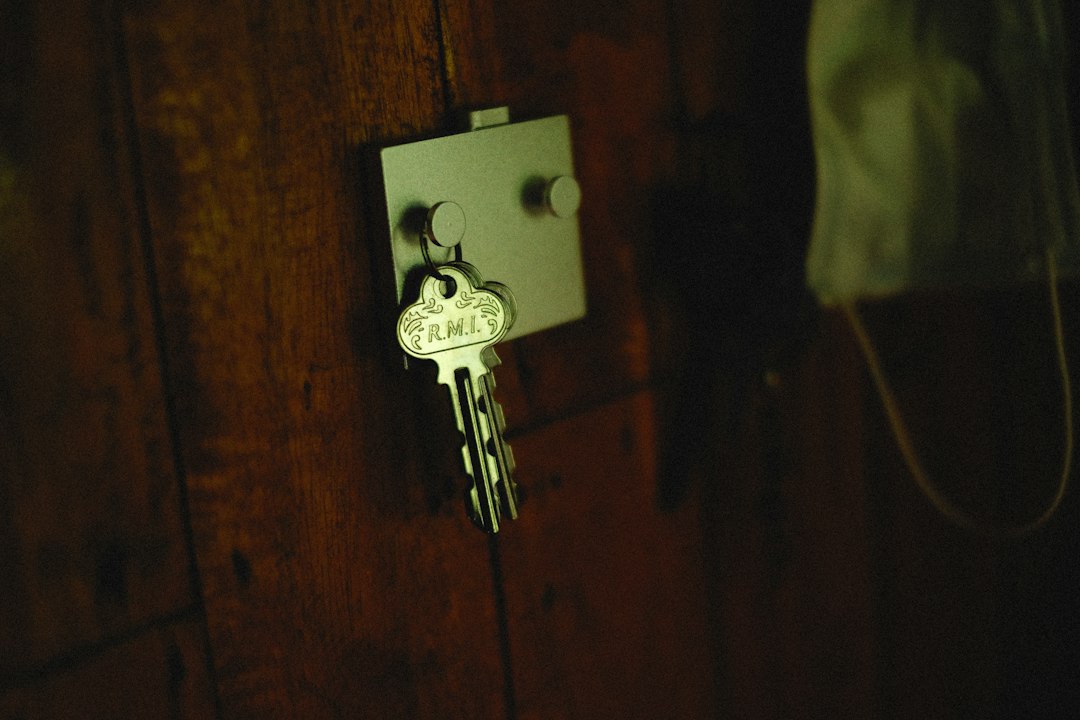
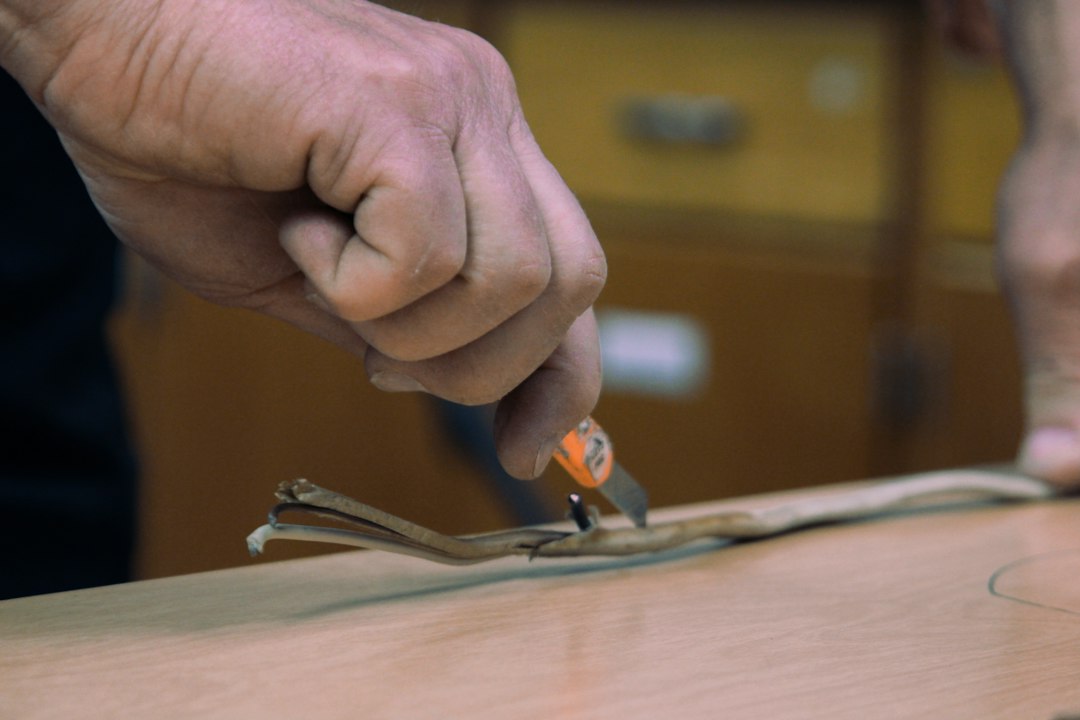
Cómo Renovar Muebles de Cocina Pintando las Puertas con Esmalte Sintético: a key is attached to a wooden doorCómo Renovar Muebles de Cocina Pintando las Puertas con Esmalte Sintético: a man is cutting a piece of wood with a pair of scissors
Para garantizar la máxima precisión técnica y seguridad en los procesos, es indispensable consultar las recomendaciones oficiales estipuladas por las normas de seguridad técnica del INSST.
Este artículo ha sido escrito por Manuel López Ramos y se publica con fines educativos, con el objetivo de ofrecer información general para el aprendizaje y la divulgación.
Introducción: La revolución del vinílico en la reforma doméstica Bienvenidos a BricoGuía. Soy vuestro guía en este proyecto, y tras más de dos décadas a pie de obra, he visto cómo las tendencias en pavimentación han mutado de forma radical. Antaño, renovar un suelo implicaba demoliciones tediosas, escombros, polvo infinito y una inversión de tiempo…
El arte de la preparación: la base de un acabado profesional A lo largo de mis dos décadas trabajando entre el serrín, las lijas y los acabados de alta gama, he aprendido una lección fundamental que diferencia a un aficionado de un maestro: el éxito de una pintura no reside en la brocha, sino en…
` and ` `. * PROHIBITED: ` `, lists (` `, ` `, ` `), and «. * Output: Directly with the HTML code. * *Introduction:* Importance of a workbench. It’s the heart of the workshop. It’s not just a table; it’s a precision instrument and a support for heavy tasks. Discussing stability, ergonomics, and…
La esencia de la carpintería moderna y el desafío del diseño industrial Bienvenidos a BricoGuía. Tras más de dos décadas entre virutas, serrín y estructuras metálicas, he aprendido que fabricar un mueble no es simplemente unir piezas, sino entender cómo conviven los materiales a lo largo del tiempo. En este proyecto nos enfrentamos a uno…
Introducción al aislamiento acústico mediante tabiquería de yeso laminado Bienvenidos a BricoGuía. En mis dos décadas trabajando a pie de obra, he visto cómo el mayor enemigo de la calidad de vida en un hogar no es la falta de espacio, sino la falta de intimidad sonora. Muchos propietarios cometen el error de pensar que…
Las cookies necesarias habilitan funciones esenciales del sitio como inicios de sesión seguros y ajustes de preferencias de consentimiento. No almacenan datos personales.
Ninguno
Las cookies funcionales soportan funciones como compartir contenido en redes sociales, recopilar comentarios y habilitar herramientas de terceros.
Ninguno
Las cookies analíticas rastrean interacciones de visitantes, proporcionando información sobre métricas como número de visitantes, tasa de rebote y fuentes de tráfico.
Ninguno
Las cookies de publicidad entregan anuncios personalizados basados en sus visitas previas y analizan la efectividad de las campañas publicitarias.
Ninguno
Las cookies no clasificadas son cookies que estamos en proceso de clasificar, junto con los proveedores de cookies individuales.